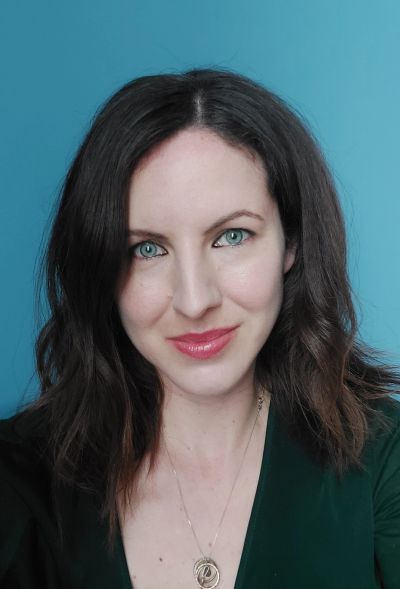
Dr Sophie Thérèse Ambler is a prize-winning historian, author and broadcaster. She combines the rigour of academic research with compelling historical storytelling, using archives, archaeology, objects and landscapes to reveal the people and societies of the past.
Sophie is the author of The Song of Simon de Montfort: England's First Revolutionary and the Death of Chivalry, published by Picador and Oxford University Press (2019), a Waterstones top-ten bestseller. The book tells the story of the extraordinary period between 1258 and 1265, when Simon de Montfort seized power from King Henry III and attempted to govern England through a council. Drawing on extensive archival research, it places the English revolution within the wider religious and military culture of medieval Europe, arguing that the crusading movement was transforming not only politics but the nature of warfare itself.
Dan Jones described her as a ‘dazzlingly talented historian’, calling the book ‘a bold and brilliantly written reassessment of one of (British) history's most misunderstood figures … alive with human detail and acute political judgement’. Sir Noel Malcolm FBA (The Sunday Telegraph) wrote that Sophie’s ‘clever use of letters, legal documents and chronicles’ meant that ‘at times, we really can hear this man speak’, and described the book as ‘finely written and based on a deep, scholarly knowledge of the sources’. Professor Saul David (Daily Telegraph) highlighted her use of ‘a surprisingly rich variety of records, chronicles and letters – some never used before’, describing the book as ‘exhaustively researched and beautifully written’.
Sophie is Reader in Medieval History at Lancaster University, where she is Co-Director of the Regional Heritage Centre and a member of the Centre for War and Diplomacy. She was awarded a Philip Leverhulme Prize in History in 2020 for her research, and in 2022 was a Visiting Fellow at All Souls College, Oxford. A Fellow of the Royal Historical Society and of the Society of Antiquaries of London, she holds a PhD in medieval history from King's College London, with joint supervision at University College London and a Thornley Fellowship at the Institute of Historical Research. She has held research positions on major collaborative projects including the Magna Carta Project and the Breaking of Britain (about the background to the Scottish wars of independence).
Her research ranges across medieval politics and society, warfare, rebellion and revolution, law and justice, the Crusades and landscape. Her first book, Bishops in the Political Community of England, 1213–1272, was published by Oxford University Press in 2017. Challenging conventional accounts of the age of Magna Carta and England's first revolution, it showed how religious ideas and episcopal authority shaped debates over the limits of kingship. John Maddicott FBA (Journal of Ecclesiastical History) noted its ‘rigorous analysis of texts’, calling it ‘bold in its range and persuasive in its reasoning’, while Professor Robert Swanson (Reviews in History) called it 'a stimulating and provocative interpretation and approach which merits serious attention not only for the book's specific analysis of 13th-century England, but as a model for applications more widely across succeeding centuries'.
Sophie's latest work explores war in medieval Britain from the Norman Conquest to the fourteenth century. Her research brings together archival, archaeological and landscape evidence with insights from anthropology, law and medicine, and ranges from kings and soldiers to war-torn communities, and from kingdoms and borderlands to battlefields. She examines war as a total historical phenomenon: from strategy, recruitment and campaigning to battle, medical care, the treatment of the dead, post-war justice and the ways communities remembered the wars that tore through them. Her third book, The Gates of Mercy: Soldiers, Kings and the Ascent of War in Medieval Britain, focuses on the thirteenth and fourteenth centuries and will be published by Picador in 2027.
Sophie also works as a broadcaster and historical consultant, appearing on television for BBC, Channel 4, Sky History and Channel 5, and on BBC Radio 4, and has contributed to programmes including BBC's Digging for Britain and In Our Time. Her work takes her from archives and libraries to archaeological excavations, historic buildings, battlefields and other historic landscapes.